Mobile filter testing
Mobile Air Filter Test Unit identifies low air filter efficiencies in critical care environments
Customer(s)
- Medical device manufacturer
Products
Country
- United States of America
The situation
The manufacturer agreed to review the existing filtration program to confirm the current HVAC system air filter performance was achieving expectations to limit production downtime due to unscheduled filter changeouts.
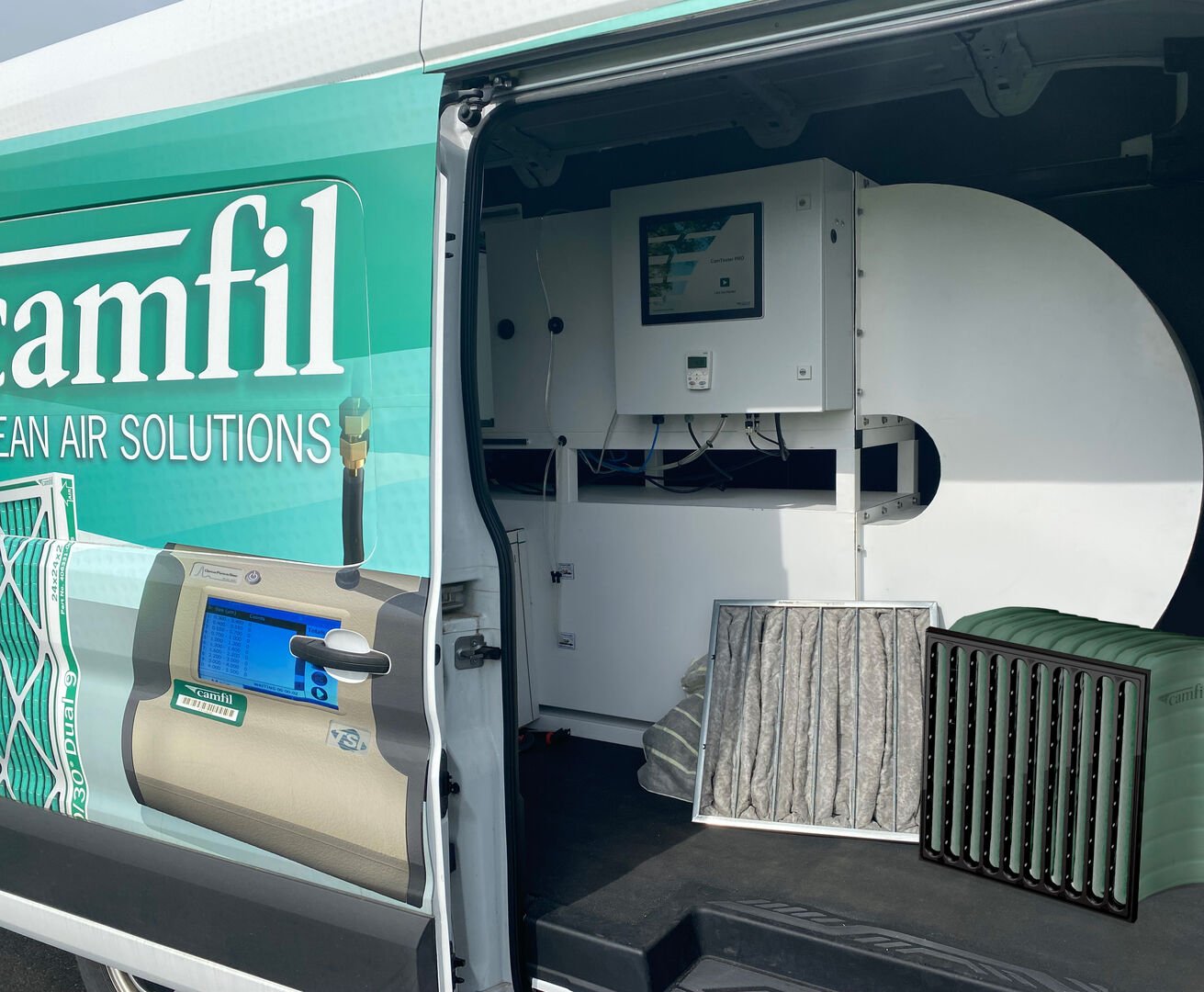
The manufacturer’s current filtration configuration relied on multiple prefiltration stages with increasingly higher particle capture efficiency ratings to protect the critical HEPA filters and improve indoor air quality. The facility’s protocol called for pleated MERV 8 (minimum efficiency reporting value) panel filters in stage one (changed quarterly) followed by MERV 14 bag filters in stage two (changed semi-annually) with 99.99% HEPA filters in the final stage.The company’s third-party facility maintenance partner had firsthand experience with the local Camfil branch's ability to validate air filter performance as well as reduce the overall operational costs of an air filtration program and deliver cleaner air. A Camfil evaluation was scheduled using the CamTester Pro, a mobile air filter testing system that determines the actual airborne particle capture efficiency of a facility’s current air filters, and measures airflow resistance with target operational air volume set to match the facility's settings. The testing system is equipped with calibrated particle counters and follows the air filtration testing procedure outlined in ISO 29462 – “Field Testing of General Ventilation Filtration Devices.”
Company profile
Medical device manufacturer in the Upper Midwest with testing equipment distribution for the North American healthcare industry. The company is a key supplier of devices used throughout the medical diagnostics field for identifying, evaluating, and managing disease treatment. Maintaining a clean and controlled environment in their manufacturing facilities is critical for delivering high-performance products to their customers.
The action
The device manufacturer's current MERV 14 stage-two bag filter, procured from a well-known industrial goods supplier, was tested in the mobile CamTester Pro.
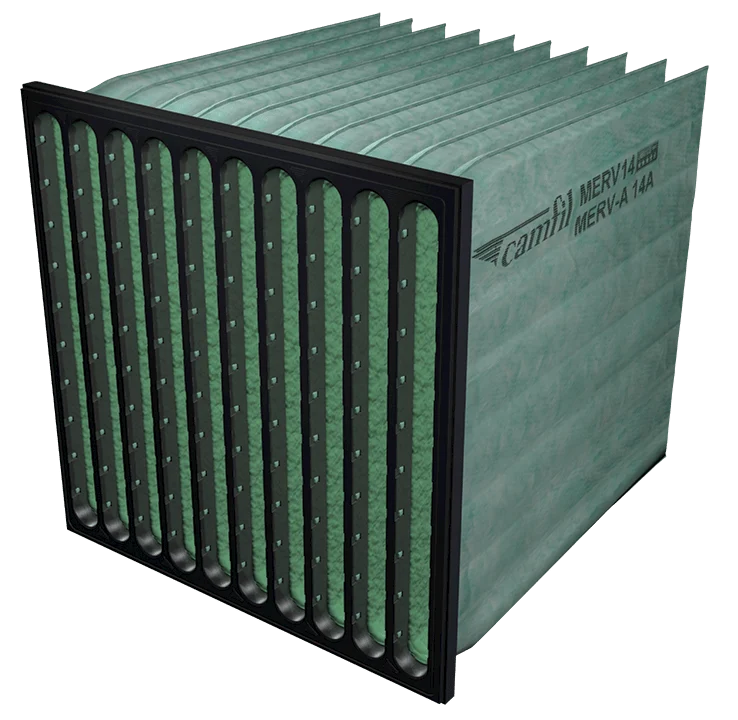
The replacement filter had been in use for only six months. Also tested was a Camfil MERV 14A Hi-Flo® ES bag filter.
After approximately a 30-minute test, the results were reported to facility management.
Result
The test results indicated the filter, which had been in service for six months, tested at only 36% efficient on 0.4-micron particles; whereas, previous tests proved that the Hi-Flo ES MERV 13A and MERV 14A HVAC filters both maintained better performance with significantly higher efficiency at substantially lower pressure drop.The CamTester Pro test results showed the Camfil MERV 14A Hi-Flo ES bag filter to be 66% more efficient with a 22% lower pressure drop.
The proof
ISO Standard 29462 is an in situ test procedure that evaluates air filter performance within the filter’s actual environment. The source of air (and the contaminants carried within it) is the same as the filter will face once in service. Data from this test is useful for comparing to air filter testing methods conducted in controlled laboratory environments such as ASHRAE Standard 52.2 test. Results of an ISO 29462 in situ test arguably provide a more accurate representation of how different air filters will perform in the same conditions once installed and operating at the designed airflow.
The ISO 29462 test determines the particle capture efficiency of an air filter on 0.4-micron-sized particles. The size dispersion of the particles within common atmospheric air is broad, but for statistical purposes when evaluating air filters, there are simply not enough particles larger than 1.0 microns to determine performance. Conversely, there are far too many of the smallest particles, particularly those less than 0.1 microns, for commonly used particle counters to accurately record. However, particles ranging in size between 0.35 - 0.45 microns are large enough to accurately count (and in sufficient numbers) to be valid when determining performance. Particles in this range are referred to collectively as 0.4-micron particles.
The Camfil CamTester Pro revealed the device manufacturer's current Grainger MERV 14 filter was significantly under-performing at only 36% on 0.4-micron particles. Assuming this filter performed at a MERV 14 level when brand new, the most likely explanation for the current low efficiency is this particular style filter relies on a temporary electrostatic charge added to the media to achieve a MERV 14 value.Previous CamTester Pro results show a Camfil MERV 13A Hi-Flo® ES registered 53% on 0.4-micron particles. The product the manufacturer began using after these tests with a higher MERV rating, the Camfil MERV 14A Hi-Flo ES, achieved 60% @ 0.4 microns. The Camfil filters are filters and do not rely on short-term electrostatically charged filter media to temporarily inflate MERV values.
The second filtration stage in this application is critical and could be one of the most important factors as it allows the final stage of HEPA filters to perform the crucial task of preventing sub-micron particles from contaminating the final production area. Under-performing filtration jeopardizes product safety which ultimately threatens patient safety. When HEPA filters are forced to encounter larger particles that should have been removed by prefiltration, the filters can load quickly and the increased pressure drop can create dangerous by-pass situations.
CamTester Pro test results
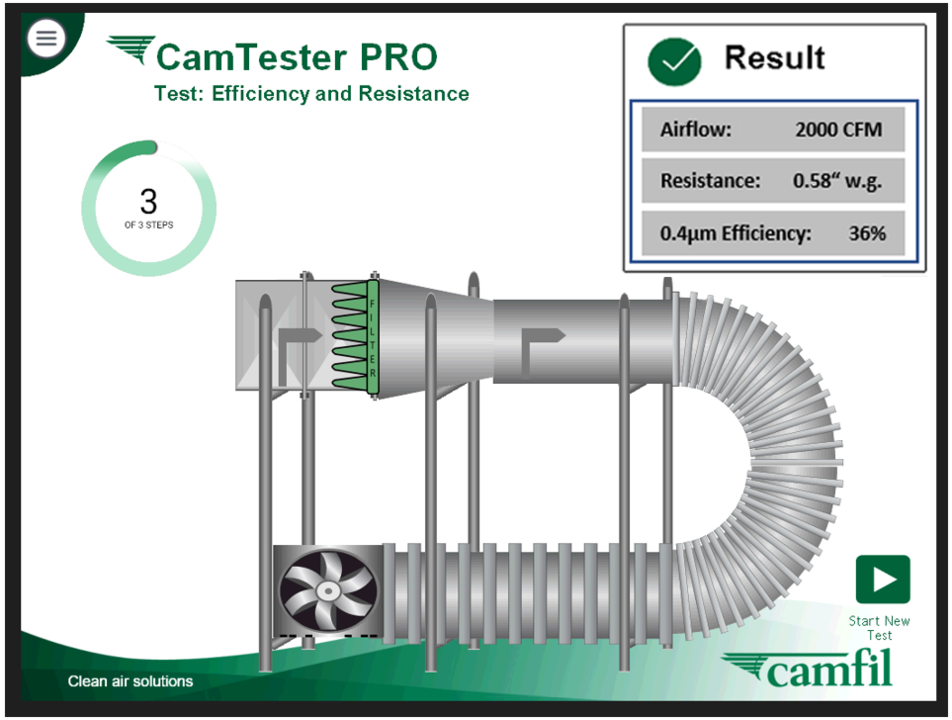
Grainger MERV 14 Pocket Filter 36% @ 0.4 micron
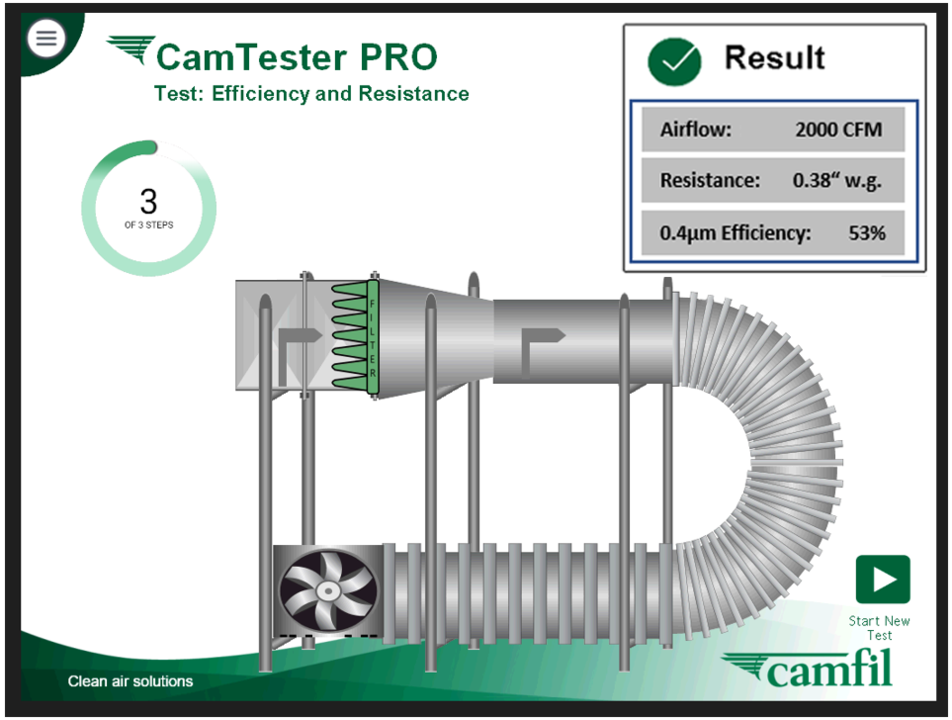
Camfil Hi-Flo ES MERV 13A Pocket Filter 53% @ 0.4 micron
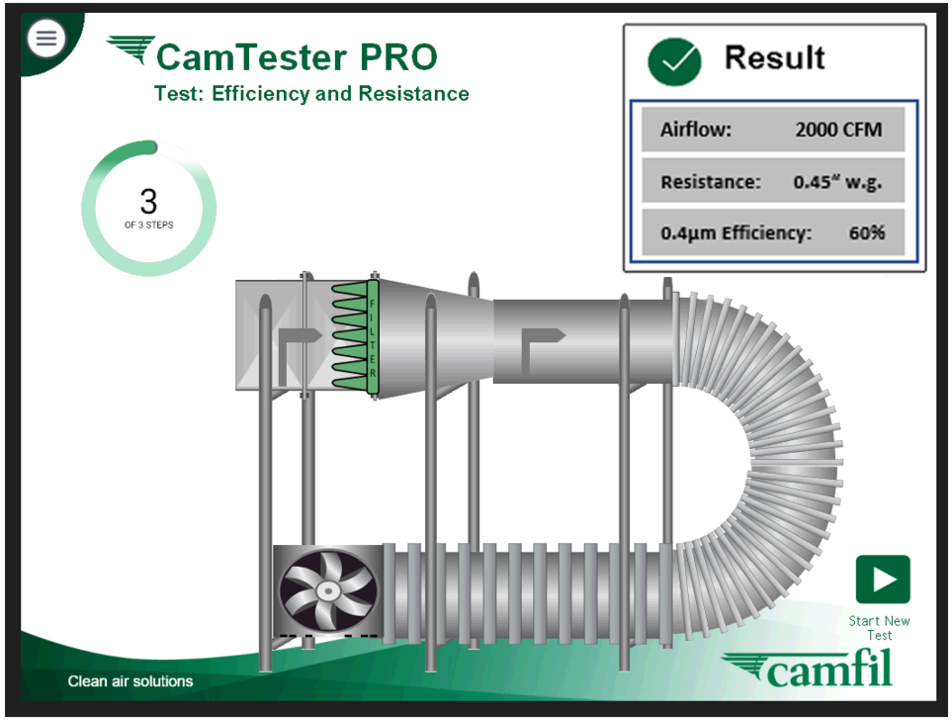
Camfil Hi-Flo ES MERV 14A Pocket Filter 60% @ 0.4 micron