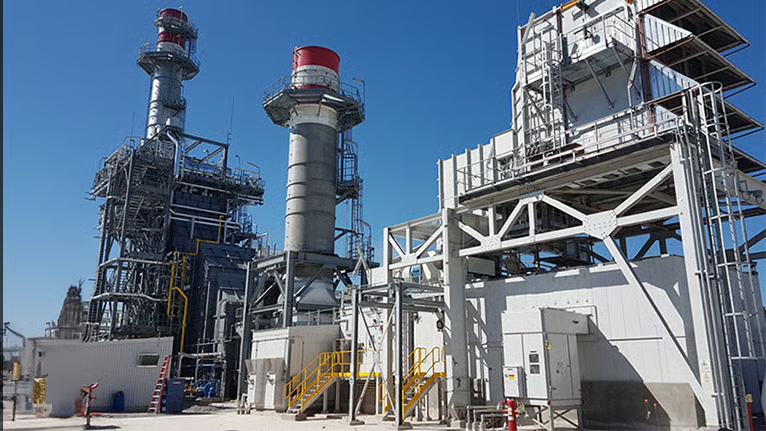
Boosting turbine output with the TurboPulse T10
CCC Pesquería in Mexico upgraded to TurboPulse T10 filters, cutting power degradation by 5x, boosting annual output by ~20,000 MWh, adding $600,000+ in yearly profit, and lowering their carbon footprint.
Applications
Customer(s)
- CCC Pesqueria (Central Electrica)
Products
Country
- Mexico
Key achievements
$600k extra profit per year
Over 5X less degradation per engine
20 000 MWh increased output per year
1 100 tonnes CO2 reduction per year to produce 1.7 TWh
Summary
Customer profile
In Mexico, CCC Pesqueria (Central Electrica) operates multiple GE turbines, each with a capacity of 215 MW, running for 8 000 hours annually.
Original installation
The filterhouse is a single-stage pulse filtration system that was originally delivered with a competitor’s conical cylindrical filter with F9* efficiency.
Site conditions
The average annual PM2.5 concentration is 10 µg/m3 and PM10 is 35.3 µg/m3 in the region. However, the plant is situated in an industrial area in Mexico with 15 neighboring plants exposing it to higher dust levels.
Camfil solution
Camfil recommended a TurboPulse™ filter upgrade, featuring hydrophobic T10* EPA-grade media to reduce fouling. The innovative filter construction promises great cleanability while maintaining a low and stable pressure drop.
Problem statement
As a result of the high PM concentrations and low filtration efficiency, the gas turbines were experiencing fouling of the compressor blades, which led to frequent offline water washes. The customer sought to reduce fouling while maintaining the lifespan of the filters of at least two years.
Results
The upgrade reduced fouling, resulting in a 5x decrease in power output degradation. This translates to an additional 20 000 MWh annually, 1 100 tonnes of CO₂ reduction, and $600 000 USD in extra profit per year, for one engine. For more details, continue scrolling down the page.
Approach and solution

Camfil conducted a site analysis, measuring on-site dust concentrations with a particle counter, and performed a Life Cycle Cost (LCC) analysis that showed significant savings by going to EPA filtration.

EPA air filters per ISO 29461-1:2021 remove harmful particulates from the air stream. This enhanced filtration reduces fouling and corrosion, leading to improved performance and longevity of the gas turbine.
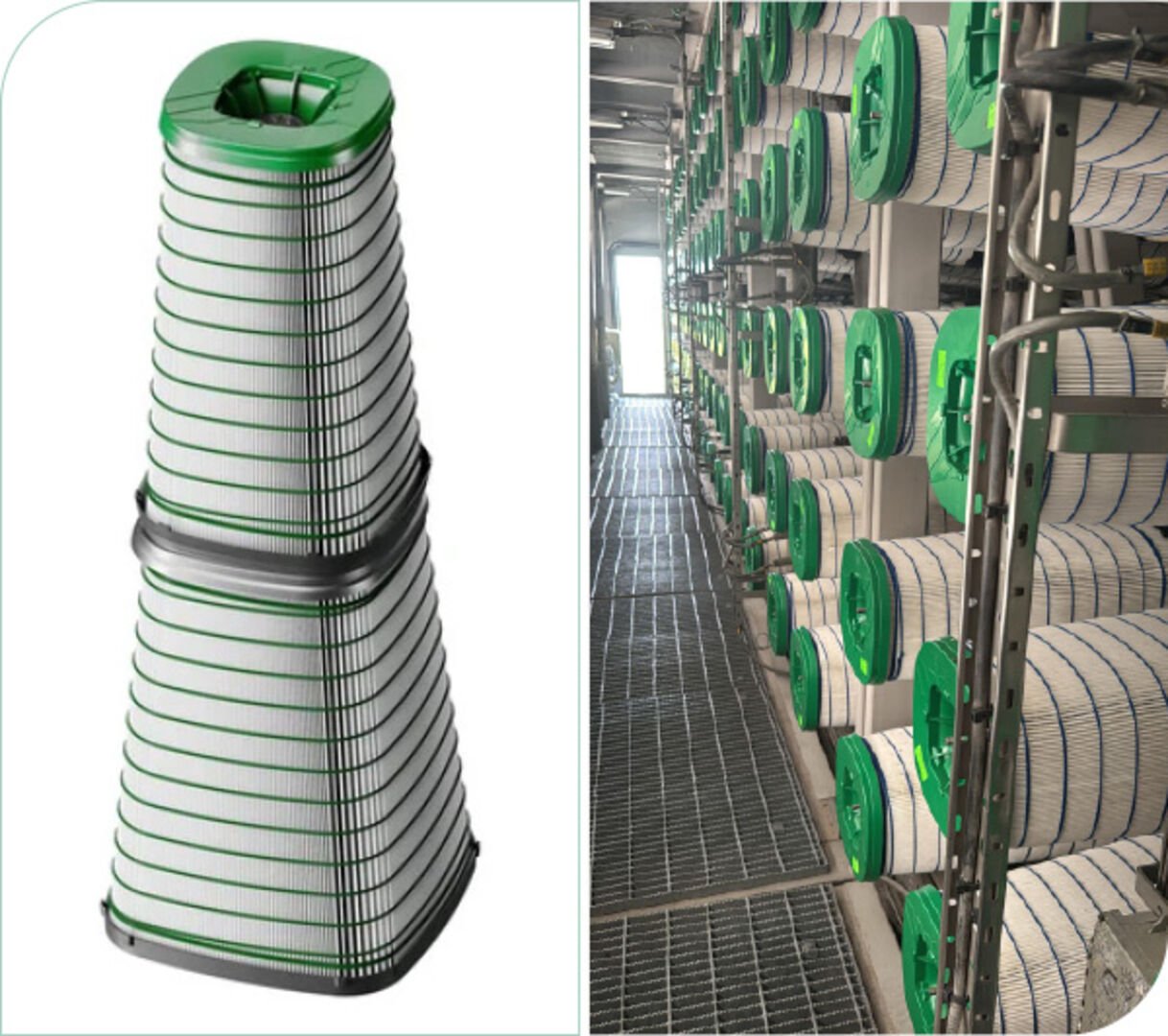
The TurboPulse™ T10 filter‘s innovative design offers a larger media area, controlled pressure drop, and improved cleaning performance for extended filter life, while delivering excellent engine protection.
Results
The graph below compares the performance of the competitor’s conical cylindrical F9 filter to the TurboPulse™ T10, highlighting significant reduction in turbine degradation. After replacing the competitor‘s filters with TurboPulse™ filters, the power degradation rate was reduced from 1.42% to 0.3%. This improvement results in an increased annual output of approximately 20 000 MWh and a reduction of 1 118 tonnes of CO2 per year while producing 1.7 TWh annually. Notably, the new installation eliminates the need for offline water washes on the engine, whereas the previous solution required multiple offline washes.While the TurboPulse™ T10 is a higher efficiency filter, after over 11 000 hours of run-time, its pressure drop is comparable to the F9 competitor’s filter, with an average of 2.25 in. w.g. (560 Pa) for the F9 filter versus 2.33 in. w.g. (580 Pa) for the TurboPulse™ filter. This is due to the higher useable media area and improved cleanability, which help sustain similar pressure drop as the filter loads.
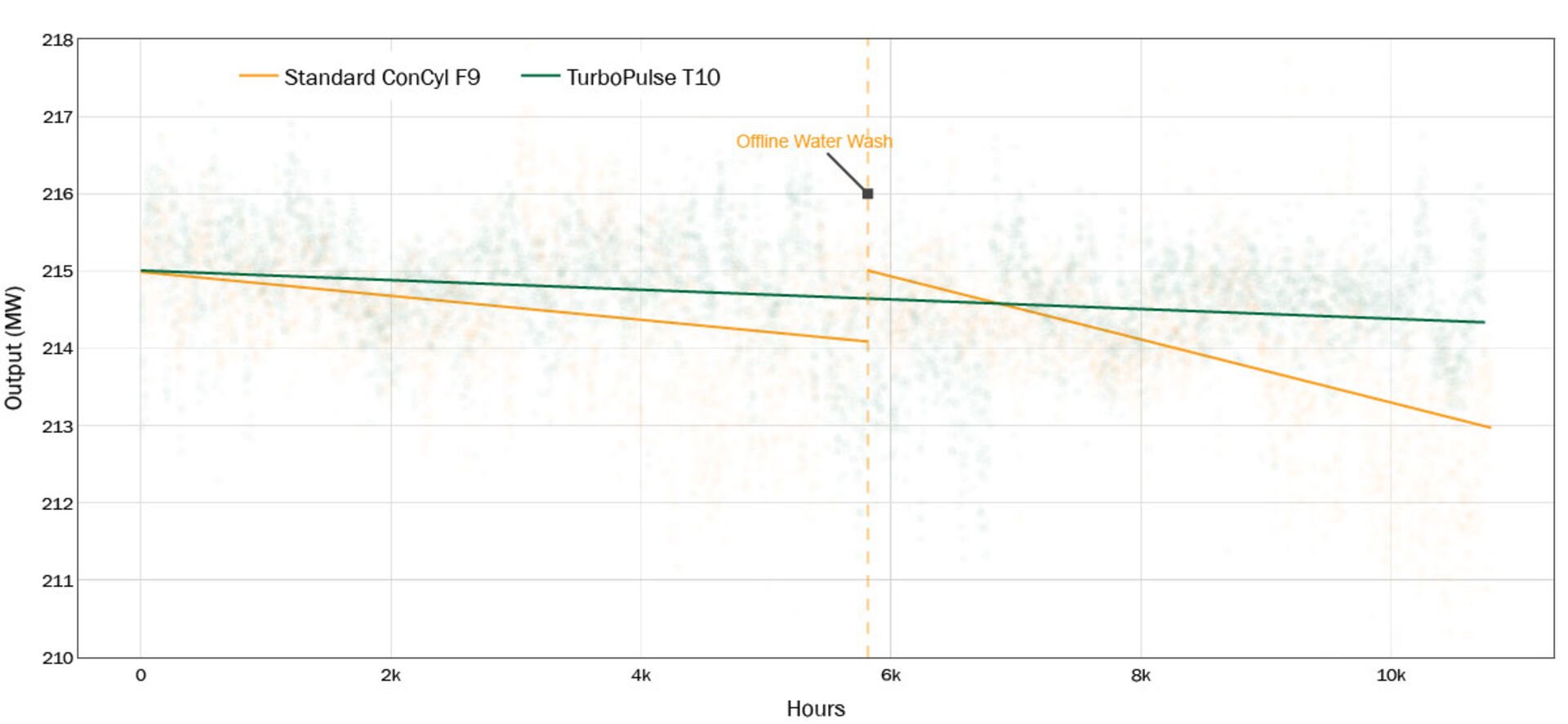
Camfl’s solution resulted in about 600 000$ extra profit per year for one engine. As a result, Pesqueria has started upgrading their other units to the TurboPulse™ filter.
*The F9 rating, per EN779:2012, is a classification for particulate air filters used in general ventilation systems. The T10 rating, per ISO 29461-1:2021, is a classification for air filters specifically designed for turbomachinery, with ISO 29461 being the first international standard for these applications. ISO 29461 should always be referenced when purchasing new filters for turbomachinery to ensure compliance with the latest performance requirements.
[1] https://iris.who.int/bitstream/handle/10665/345329/9789240034228-eng.pdf?sequence=1