Washable vs non-washable air filters: What the data shows
Reveals the impact of washing on filtration efficiency, dust holding capacity, energy consumption, and long-term sustainability.
Washing air filters feels like the sustainable choice. Reuse, save cost, reduce waste. But what actually happens after every wash tells a very different story. Efficiency drops, energy use increases, performance becomes unpredictable and the real costs stay hidden.
Proven Performance Data
The data tells a different story
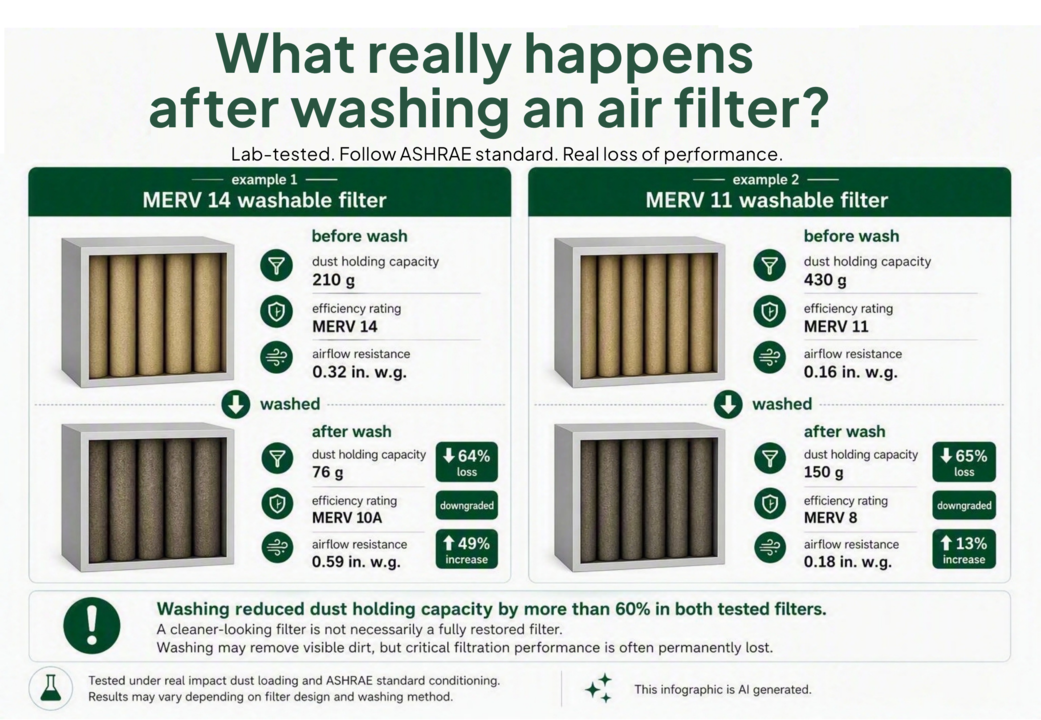
Independent testing based on ASHRAE 52.2-2017 highlights the real impact of washing:
The Problem With Washable Filters
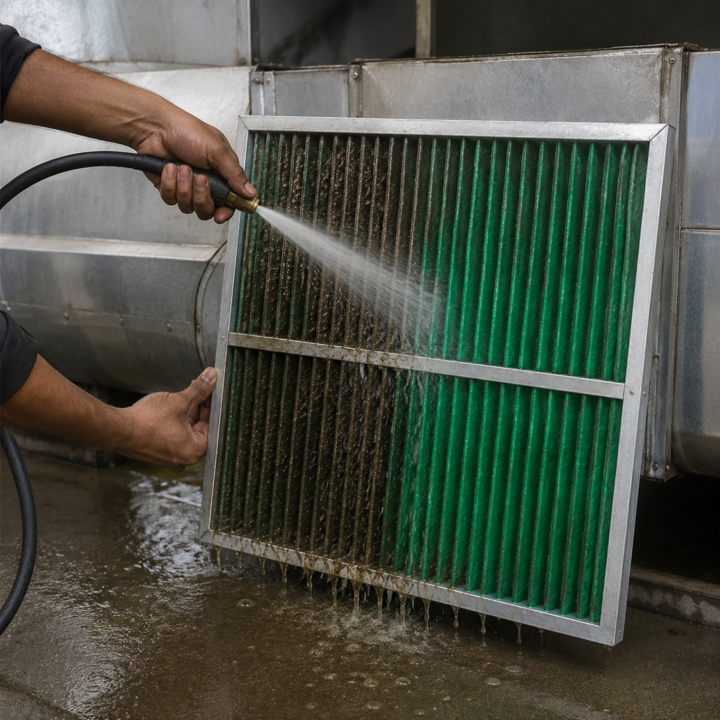
Washable filters are often positioned as reusable and sustainable, with claims of maintaining performance after cleaning. However, controlled testing shows a different reality:
- Filtration efficiency declines with each wash
- Dust holding capacity drops significantly
- Airflow resistance increases
- Performance becomes inconsistent over time
Air quality is non negotiable for critical applications
In critical applications, air quality cannot be compromised.
Non washable filters provide the consistency and reliability required where performance must not fail.
These environments require reliable airflow, stable filtration efficiency, and reduced operational risk.
The Hidden Cost of Washing
While washable filters may appear cost-effective upfront, they introduce hidden operational impact: