The Hidden cost of washing air filters
Is a washable air filter really more sustainable? While reusability is often viewed as a sustainability advantage, the full picture is more complex. If repeated washing reduces filtration performance, increases fan energy consumption, and requires water, labour, and maintenance resources, the environmental and operational costs may outweigh the perceived benefits.
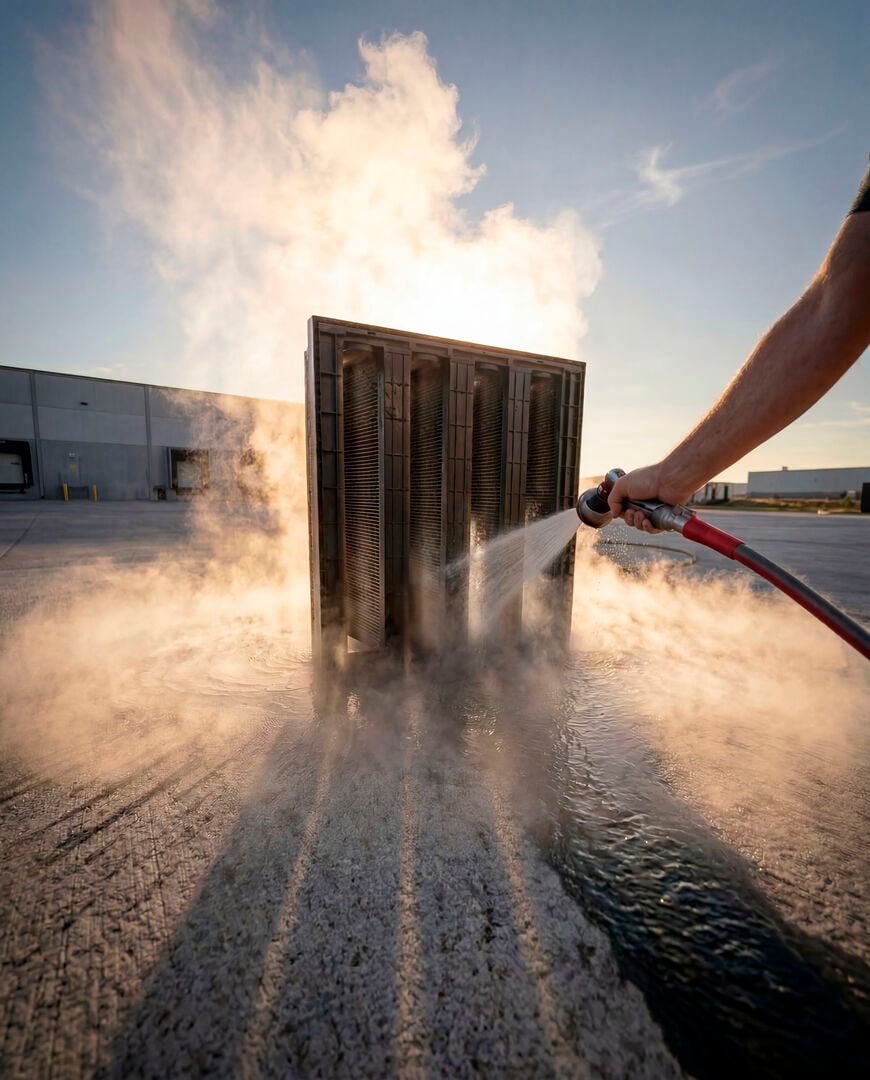
Washable air filters are often seen as a better option than disposable ones
Reuse instead of replacing - sounds like the responsible thing to do. Less waste, lower cost. On paper, it makes a lot of sense. But when you look beyond reusability and consider the full lifecycle of a filter, the picture becomes more complex.
Washing can change how a filter performs over time. If particle capture declines or airflow resistance increases, the ventilation system may need more fan energy to maintain the required airflow. The result can be higher operating costs and less predictable indoor air quality.
This raises a more important question: should a filter be considered sustainable simply because it can be reused?
In air filtration, performance matters more than anything else.
While filtration standards focus on performance, building owners and facility managers often need to consider additional factors when selecting a filter: