Clean air to the rescue: filter upgrade saves turbines from degradation
GPSC Thailand upgraded the air filters on six of their gas turbines to TurboPulse T12 cartridge filters, achieving $520 000 USD savings annually, 166 000 MMBtu fuel reduction per year, 8 800 tons of CO2 reduction annually, and 3x improved compressor efficiency
Applications
Customer(s)
- Global Power Synergy Public Company Limited
Products
Country
- Thailand
Key achievements
520,000$ USD savings per year
166,000 MMBtu fuel reduction per year
8,800 tons CO₂ reduction per year
3X improved compressor efficiency
Summary
Customer profile
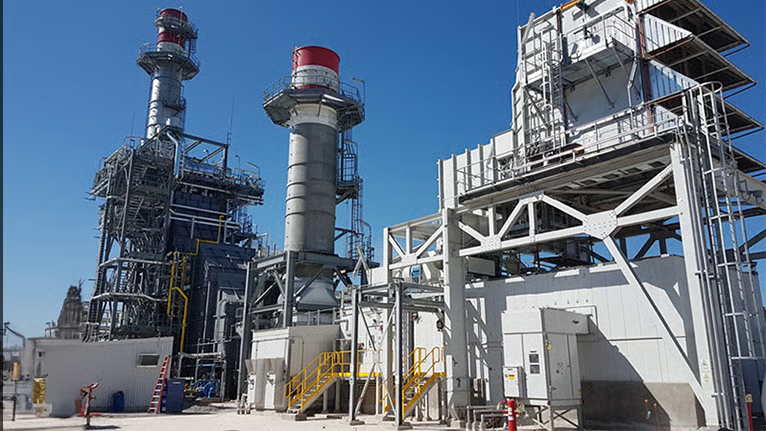
Global Power Synergy Public Company Limited in Thailand focuses on power generation and renewable energy. Camfil provided solutions for six, 38 MW GE gas turbines in three different plants within the company.
Original installation
The original installation was a two-stage filtration system. The first stage was equipped with T6 bag-style pre-filters, while the second stage was equipped with T10 v-bank-style final filters with a 300mm depth.
Site conditions
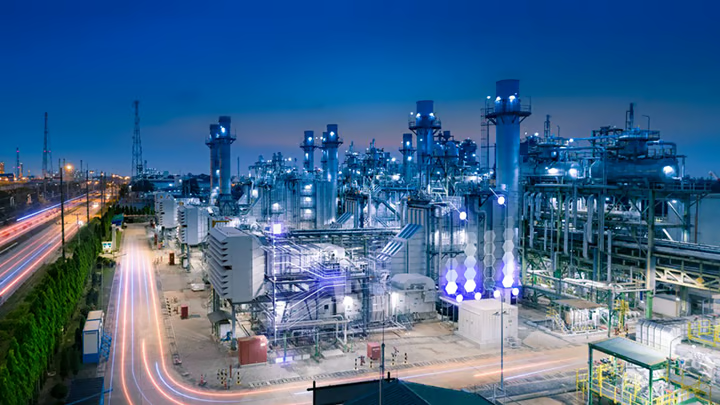
The plants are situated along the coast of Thailand in an industrial area, where they encounter high dust concentrations. The annual average for PM2.5 is 34.8 µg/m3 while the PM10 average is 86.2 µg/m3. Both are above the annual average air quality guidelines of 5 µg/m3 and 15 µg/m3 respectively[1].
Camfil solution
To reduce fouling and related downtime, Camfil suggested an upgrade to CamGT 3V-600 T12. It is an EPA-class, v-bank-style filter with a 600mm depth, that is optimized for long life in harsh environments with a low and stable pressure drop.
Problem statement
As a result of the high dust concentrations, the gas turbines experienced fouling of the compressor blades. This lead to a drop in compressor efficiency which required shutting down the engines for water washes, as well as high fuel consumption and carbon emissions.
Results
This resulted in a higher and more stable compressor efficiency, lower fuel consumption and CO2 emissions, as well as total savings of $520,000 per year on operational costs. For more details and information, please view details below.
Approach and solution
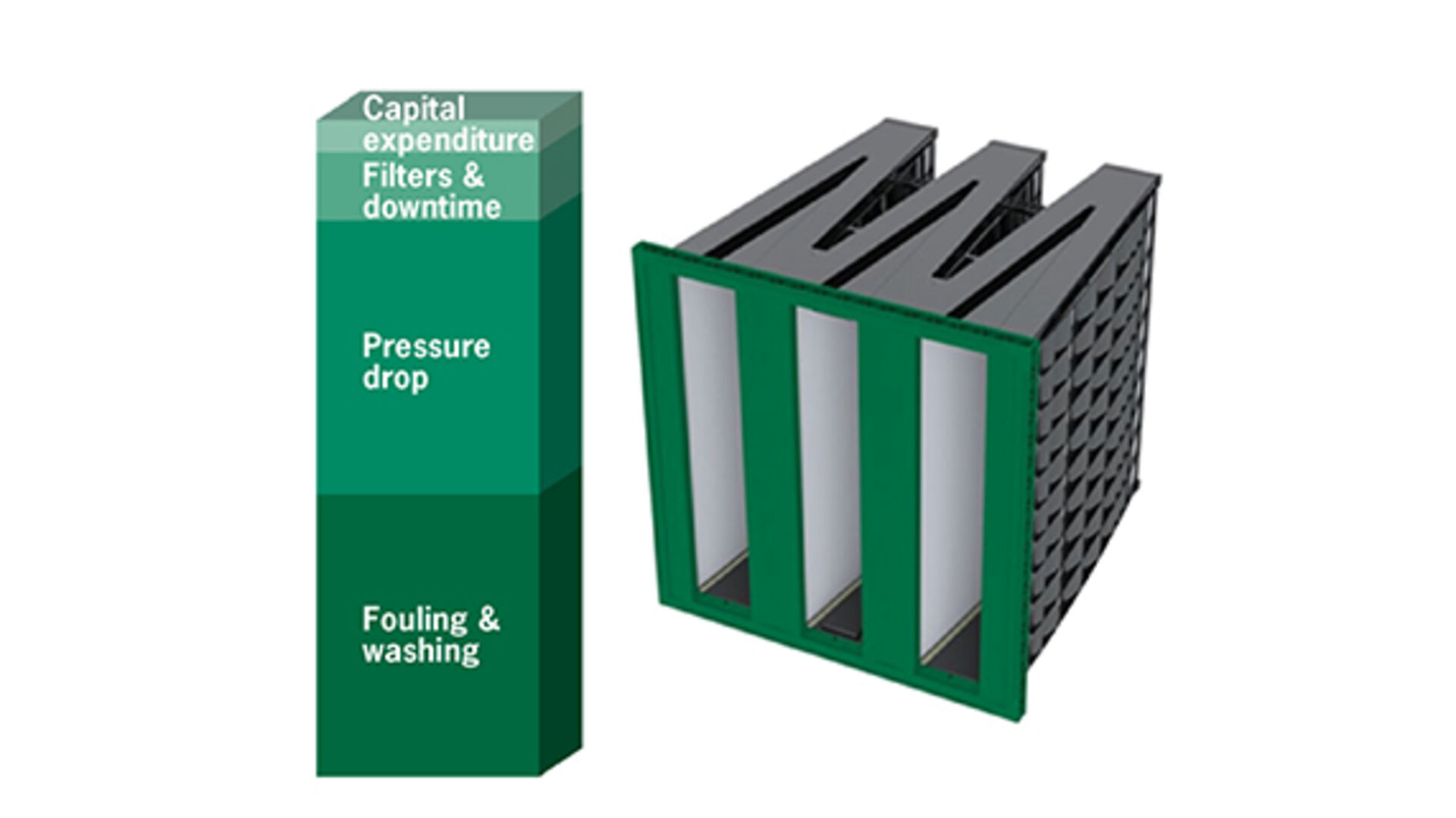
Camfil conducted a Life Cycle Cost (LCC) analysis to show the long-term cost-benefits of the proposed solution. The results showed ≈$500,000 savings per year, considering installation cost, fouling, pressure drop, offline washes, as well as output loss. The customer reported actual savings were close to the estimation at $520,000 per year.
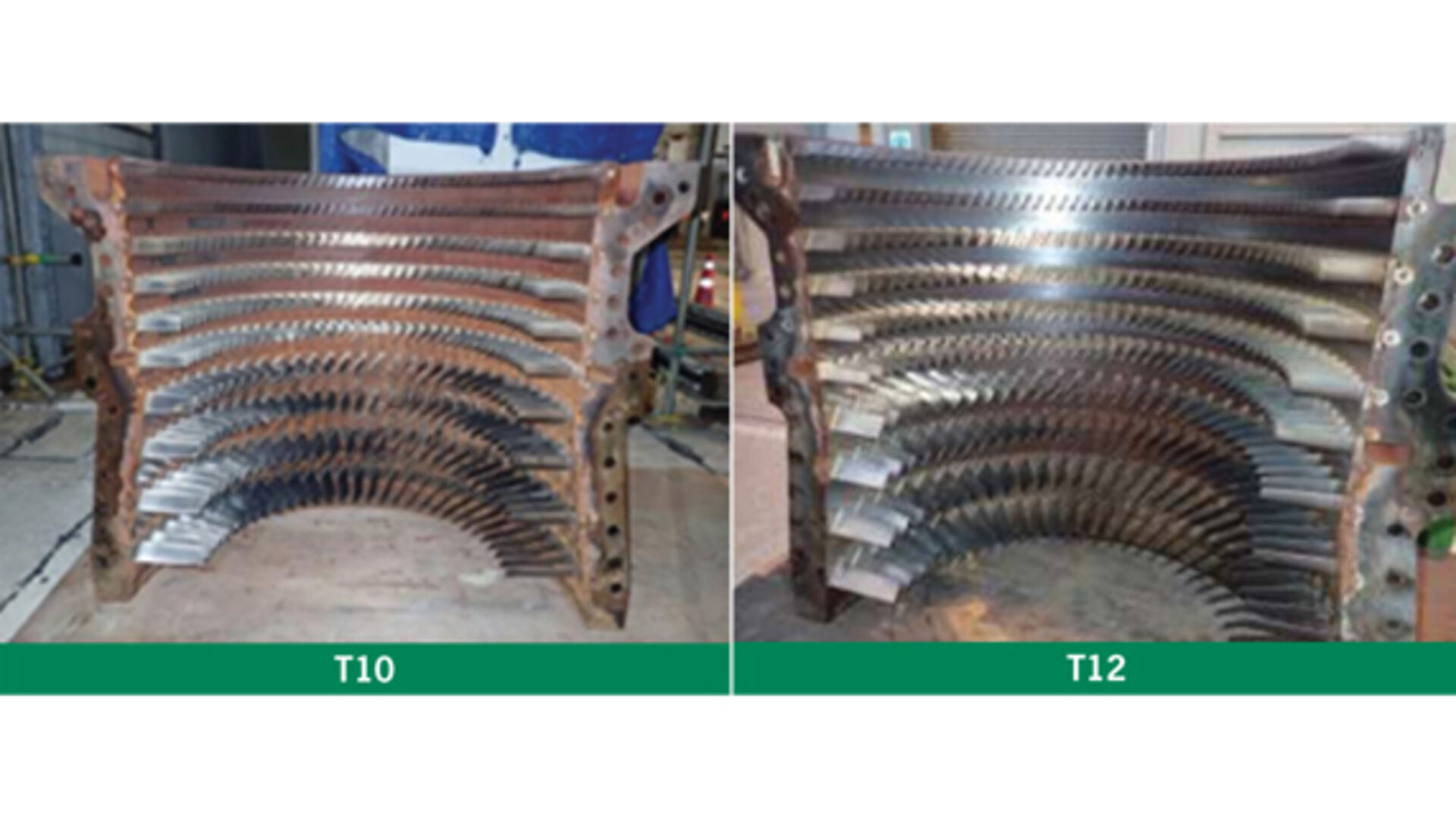
After ten months of operation, the images reveal that the compressor blades equipped with the T12 installation were in significantly better condition. They displayed fewer signs of fouling and wear compared to the compressor blades with the T12 installation. This indicates that the T12 installation provided a more effective solution in maintaining the cleanliness and performance of the compressor blades over the observed period.
Results
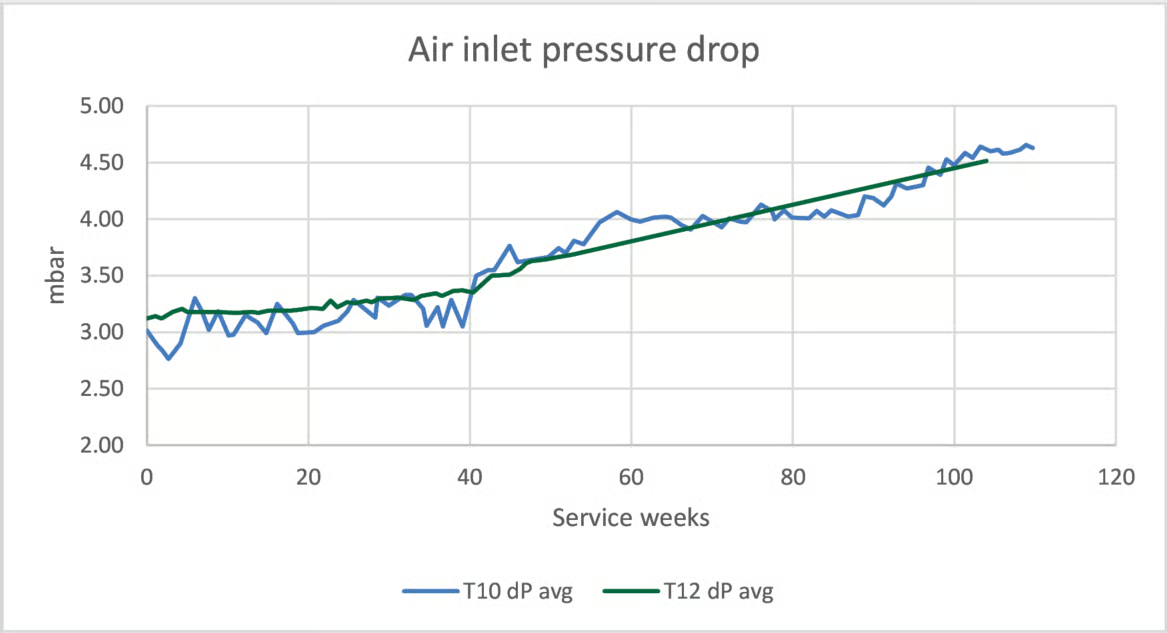
The graph on the right shows that despite its higher efficiency rating, which typically implies a greater pressure drop, the CamGT 3V-600 filter configuration had a similar performance to the T10 efficiency filter. This is due to its 600mm deep frame that allows for greater media area and low velocity, providing the lowest pressure drop and longest available life.
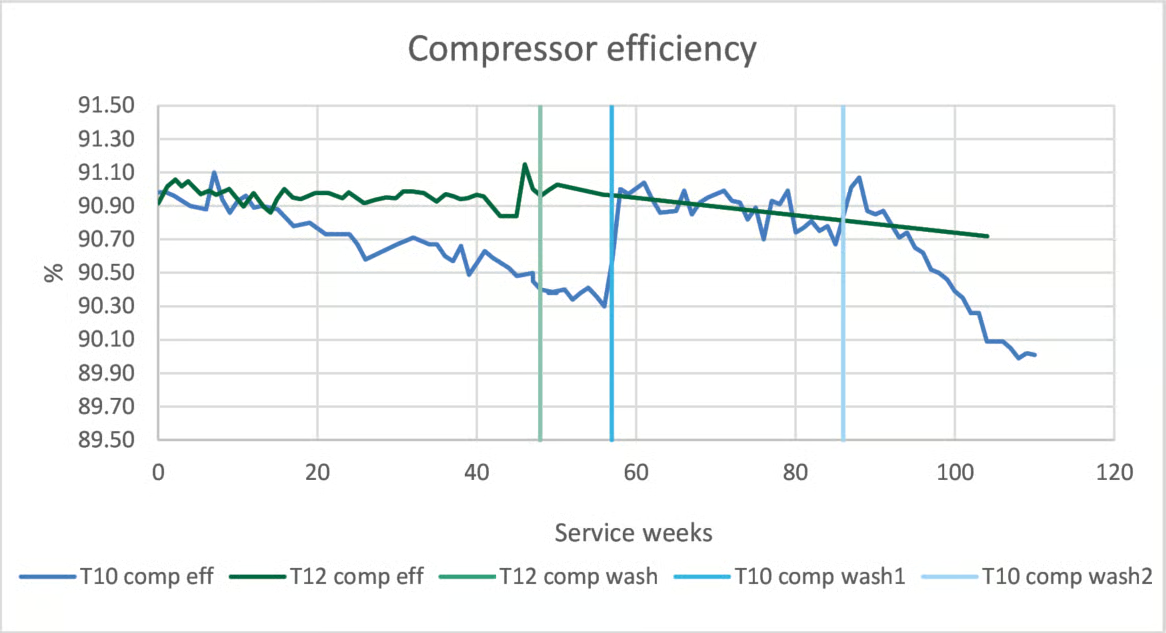
Camfil’s solution saved GSPC 520,000$ and helped reduce fuel consumption of 166,000 MMBtu and CO2 emissions of 8,800 tons each year, the equivalent of taking approximately 1,900 cars off the road!
[1] https://iris.who.int/bitstream/handle/10665/345329/9789240034228-eng.pdf