2024.04.16
Microorganism reduction in F&B warehouse
This case study highlights the reduction made in contaminants by implementing Camfil's high performance air cleaners and monitoring solutions.
Key achievements
74% reduction of bacteria, fungi and yeasts
Certification of the rooms as class ISO 8 (ISO 14644-3:2021)
Compliance with internal validation processes
Solution
Camfil’s initial proposal was a turnkey project, with a scope that included: dimensioning, design of auxiliary equipment, electrical installation and the installation of air cleaners.
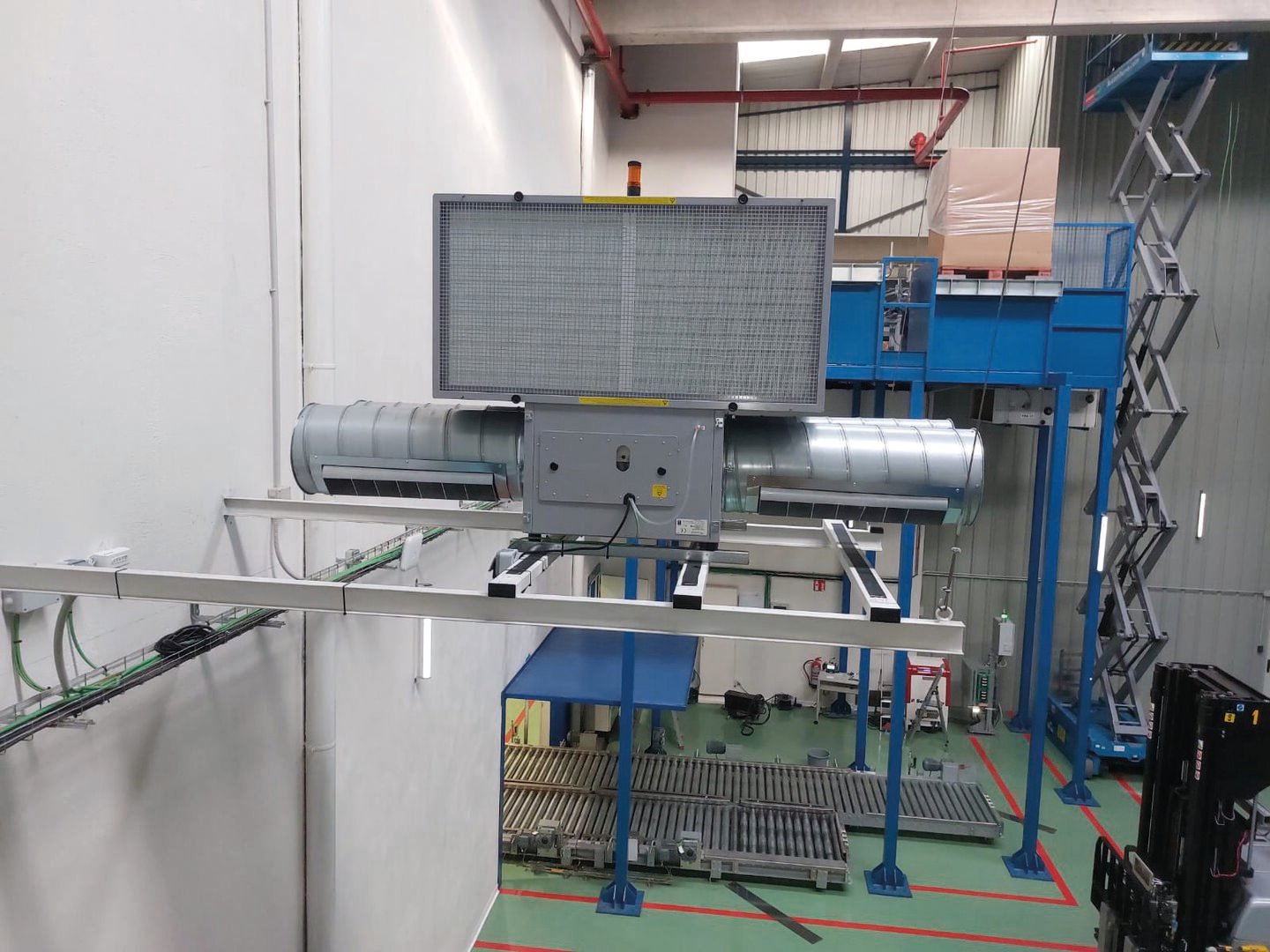
Once the primary activities were completed, the air cleaners were distributed into the rooms as follows:
An AirImage sensor was added to each of the rooms to measure the PM1, PM2.5 and PM10 values in real time and regulate the CC 6000 units according to the defined air quality parameters.
Currently, this solution provides an average of 13.5 air recirculations per hour in each of the rooms, guaranteeing a controlled environment that allows the client to supply their products with optimum conditions of quality and safety.
Once the primary activities were completed, the air cleaners were distributed into the rooms as follows:
Room I - Finished product
- Installation of 2 CC 6000 Vertical Units
- Installation of 2 CC 6000 Horizontal Units
Room II - Finished product
- Installation of 4 CC 6000 Horizontal Units
An AirImage sensor was added to each of the rooms to measure the PM1, PM2.5 and PM10 values in real time and regulate the CC 6000 units according to the defined air quality parameters.
Currently, this solution provides an average of 13.5 air recirculations per hour in each of the rooms, guaranteeing a controlled environment that allows the client to supply their products with optimum conditions of quality and safety.
Process overview
Betapacks core business is the manufacture of caps for a wide range of food and beverage liquids such as bottled water, oil, soft drinks, juices and dairy products.
Humid and warm environments, typical for some areas in the food industry, can contribute to the proliferation of microorganisms such as bacteria and fungi. The presence of such microorganisms pose a risk to human health and product safety.
Betapack already had a ventilation system in place but decided that the use of air cleaners to increase air changes and improve indoor air quality would support reducing exposure to harmful microorganisms. This ensures optimal conditions of quality and safety for workers and products.
Humid and warm environments, typical for some areas in the food industry, can contribute to the proliferation of microorganisms such as bacteria and fungi. The presence of such microorganisms pose a risk to human health and product safety.
Betapack already had a ventilation system in place but decided that the use of air cleaners to increase air changes and improve indoor air quality would support reducing exposure to harmful microorganisms. This ensures optimal conditions of quality and safety for workers and products.

Challenges
The customer was looking for a solution that would allow them to reduce the number of bacteria, fungi, and yeasts without disrupting operations inside their two finished product rooms. Due to the use of mobile robots, the space available to install the equipment was limited, in some cases more than 10 meters high.
The correct sizing of the installation, in addition to providing a consistent air flow, required guaranteeing a uniform distribution of the air in the room.
Additionally, Betapack requested real time monitoring of the performance of the installation, as well as the ability to respond to external and/or internal disturbances, maintaining the air quality levels at all times.
Product
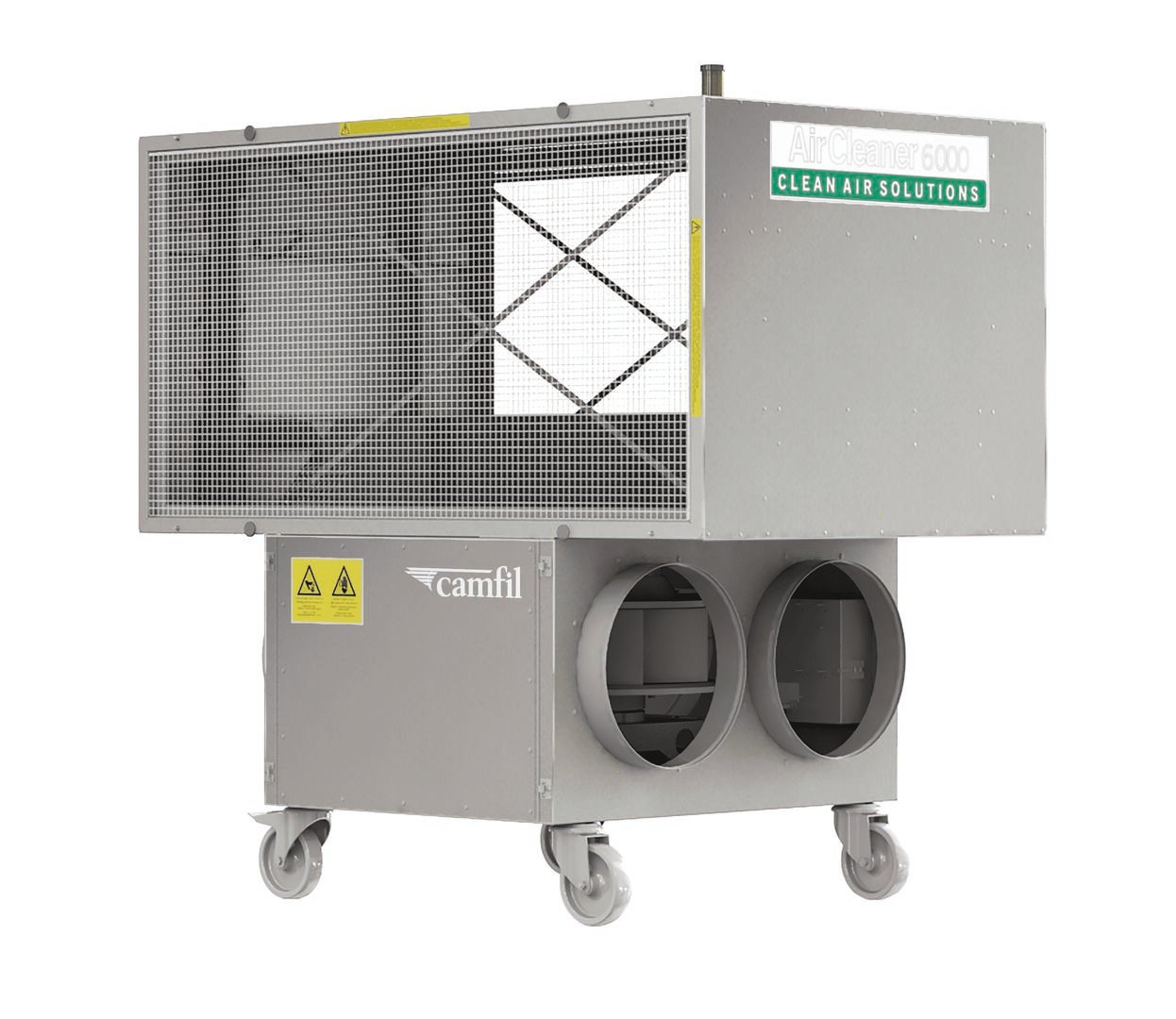
- ProductCC 6000
- ModelCC 6000 Vertical / CC 6000 Horizontal
- Airflow6000 m³/h
- Energy consumption887 W
- Filter offeringPrefilter: Ecopleat ePM1 60% (ISO 16890), 4pcs Main Filter: Megalam HEPA H13 (EN 1822), 2 pcs
- AccessoriesAir Distribution: Diffusion nozzles and ducts for nozzles. Differential pressure sensors
- ApplicationFood and Beverage plastic cap storage. Reduction of bacteria, fungi and yeasts
- Installation date2023
Results
After the start-up, an external company performed an analysis to determine the effectiveness of the installation in both rooms. The measurements were carried out according to the ISO 14644-3:2021 standard for the average value of particles sizes 0.5 μm (number of particles) and 5 μm (particles/m³). The results obtained showed that not only is the ISO 8 class reached, but the values are at the limit of the ISO 7 class (the concentration of particles between one class and the next is 10 times lower).
Likewise, the active control of the CC 6000 equipment through the AirImage sensor represents an energy saving that allows the client to reduce the operating cost of the installation and contribute positively to the environment.
Likewise, the active control of the CC 6000 equipment through the AirImage sensor represents an energy saving that allows the client to reduce the operating cost of the installation and contribute positively to the environment.